
BCT & CCA Make A Splash with 2nd Chesapeake Reef Project
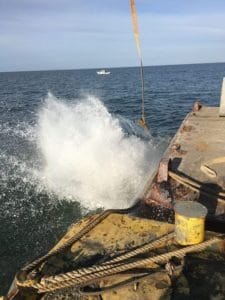
Tangier Sound is about to have a whole lot more underwater habitat for anglers to explore! Tuesday, February 21, 2017, marked the deployment of CCA's National Habitat Program, The Building Conservation Trust's (BCT) second reef project in the Chesapeake Bay. Anglers alike will have even more options in Tangier Sound for what was already considered a premier destination and the annual location for CCA Maryland's popular Red Trout Tournament. "Everyone in the area is really excited about the enhancements to the Tangier reef site" commented CCA Lower Shore President, Brad Taylor. "I think having a place for oysters and other shellfish to thrive is probably one of the more exciting aspects of this project."
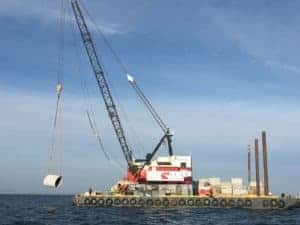
The new BCT reef was constructed using 400 tons of raw material such as concrete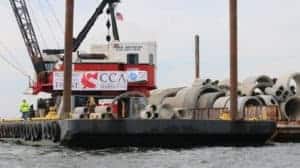 drainage pipes and manhole sections. Rinker Materials from Frederick, Maryland, a large supplier to the construction and building materials industry, played a key role in coordinating the donated materials and logistics of delivering more than 20 truck loads. The new underwater habitat, promises to be a boom for both recreational anglers and commercial charter captains who depend on fishing structure and live bottoms economically. "The more reef sites we have to hold essential bivalves and baitfish, the better" explained Taylor.
"Establishing artificial reefs on the Chesapeake is long overdue," Captain Dan Harrison, owner of Salty Fly Guide Service said. "We are losing land at an alarming rate. Placing these reefs in the Tangier Sound will create habitat that will create food sources as well as protection for our sustained species as well as hopefully bring in new ones." Captain Harrison is a Smith Island native and his light tackle and fly guide trips leave from Crisfield's Somers Cove Marina targeting Striped Bass, Trout, Croakers, Blues and Spanish Mackerel.
 Artificial reefs are man-made habitats that vary from reef to reef. Some of the reefs are composed of concrete reef balls of varying sizes, bridge rubble, and even old boats. "Artificial reefs can be just as productive as natural hard bottom," Rick Elyar, Chair of CCA Maryland's Habitat Committee said. "There is nothing artificial about the amount of living, filter feeding organisms that will make these reefs their home, and that is great news for our local fishing industry and to continue restoring the water quality of our Chesapeake Bay." As the reef ages and gets encrusted with oysters, red beard sponge and plethora of bryosoans & hydrozoans, this ever increasing natural complexity will encourage small fish to colonize the reef, thus attracting larger predatory fish such as striped bass, blue fish, tautag, and croaker. In fact, tautag may even begin to spawn at the reef site.
Although artificial reefs may not have the same visual aesthetic as natural oyster reefs or ledges, nor the fascinating intrigue of historic shipwrecks, artificial reefs are just as effective in attracting a wide variety of marine life. Taylor continued to explain "The benefits of this Tangier reef site are truly endless for the ecosystem." As early as spring, our new artificial reef will begin attracting fish. Within six months, colonies of sponges, invertebrates and even certain types of corals will begin to take hold of the new structure. Within time for this years Red Trout Tournament, the reef site will be a habitat for sustainable populations of gamefish. "This project could also provide tournament anglers with a chance to catch sheepshead, cobia or sea bass; somewhat of a rarity this far up the bay" explained Taylor of the Red Trout Tournament he coordinates annually.
Captain "Walleye" Pete Dahlberg frequents the islands of Tangier Sound with clients for his guide service and captured CCA Maryland's Crisfield Slam Title having successfully caught 5 species of game fish during the 2015 CCA Red Trout Tournament. Dahlberg is looking forward to this years tournament and said "Nothing but great things can happen under the water when an artificial reef is placed in Chesapeake Bay!" With over 3000 guided light tackle trips, Captain "Walleye" Pete Dahlberg has been guiding on the Chesapeake Bay and Tangier Sound for more than 17 years.
Brad Taylor feels "the community and our CCA members are looking forward to watching the reef site grow into a flourishing habitat for all species calling Tangier Sound home."
BCT and CCA Maryland have rolled out a number of other habitat initiatives in recent months, including the ongoing Living Reef Action Campaign project, which utilizes concrete Reef Balls to restore oyster reefs in the Chesapeake Bay while engaging thousands of school students across Maryland in STEM-related learning activities. BCT projects in other states include The Fripp Island Reef which involves several deck barges, armored personnel carriers and more than 200 concrete habitat modules, as well as the Fantasy Island Reef in Tampa Bay, which is enhancing oyster habitat and stabilizing roughly 700 feet of shoreline on the island.
For more information about CCA Maryland’s habitat work in the Chesapeake Bay, contact David Sikorski @ davidsikorski@ccamd.org and learn more about CCA Maryland's at www.CCAMD.org