
The St. Mary’s River oyster sanctuary in Maryland is one of the most significant oyster restoration sites in the Chesapeake Bay, serving as a model for habitat recovery and ecosystem management. Originally established as a sanctuary in 2010, the river was chosen in 2017 as one of Maryland’s five tributaries targeted for large-scale oyster restoration under the Chesapeake Bay Watershed Agreement. This designation marked a critical step in the state’s efforts to revive native oyster populations, which have declined sharply over the past century due to overharvesting, disease, and habitat loss. By 2022, restoration work in the sanctuary had successfully planted over 151 million oyster seeds, resulting in the rehabilitation of approximately 60 acres of oyster reef. These early efforts combined traditional spat-on-shell planting with other restoration strategies aimed at rebuilding oyster beds and enhancing the ecological complexity of the river.
Key partners in these initiatives include the Maryland Department of Natural Resources, the Oyster Recovery Partnership, the National Oceanic and Atmospheric Administration, and the U.S. Army Corps of Engineers. Together, these organizations have deployed a variety of restoration techniques, from seeding and substrate placement to the creation of three-dimensional reef structures that mimic natural oyster habitat. These efforts not only increase oyster survival and reproduction but also provide critical habitat for a host of other species, including fish, crabs, and benthic invertebrates, while improving water quality through the oysters’ natural filtration. The sanctuary has become a focal point for research, monitoring, and community engagement, demonstrating the importance of collaborative, science-based approaches to ecosystem restoration.
Building on this strong foundation, the Chesapeake Bay Foundation (CBF) and the Coastal Conservation Association (CCA) Maryland have been instrumental in expanding the sanctuary’s reef structure and population in 2024 and 2025. Through the deployment of hundreds of dome-shaped reef balls seeded with juvenile oysters (spat), these efforts provide elevated, structured habitats that protect young oysters from silty river bottoms and predation. The reef balls also create interstitial spaces that attract fish, crabs, and other aquatic species, supporting a thriving, multi-species ecosystem. Community involvement has been a central component of these projects, with volunteers and students from St. Mary’s College of Maryland participating in planting programs like the Supporting Oyster Aquaculture and Restoration (SOAR) initiative, helping to plant thousands of oysters into the sanctuary.
The ongoing work by CBF, CCA Maryland, and their partners represents a continuation of decades-long efforts to restore the St. Mary’s River and the Chesapeake Bay as a whole. Beyond boosting oyster populations, these projects contribute to the health of the wider estuary, stabilizing sediments, improving water clarity, and enhancing biodiversity. As the sanctuary’s reefs mature, they form complex three-dimensional structures that not only sustain oysters but also serve as vital habitat for a range of commercially and ecologically important species. This long-term, collaborative approach demonstrates how careful planning, scientific expertise, and community engagement can work together to restore vital habitats and ensure the resilience of the Chesapeake Bay for generations to come.
Want to fish St. Mary's Reef?
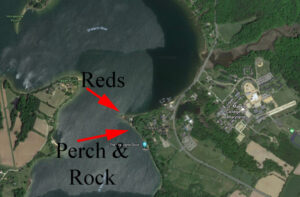
Below is an article by FishTalk that spotlights the new marine science program at St. Mary’s College of Maryland and its setting on the thriving St. Mary’s River oyster sanctuary. The piece also notes nearby fishing opportunities, recommending a launch from Piney Point on St. George’s Creek and working upriver toward the college docks. Productive spots include the rip-rap along the historic St. Mary’s City waterfront and the mouth of the salt pond by Church Point, where anglers can target rockfish, white perch, speckled trout, and redfish.
Notes from the Cockpit: The Brainiacs are Coming! (Yay!)
Education is the key to saving the Chesapeake Bay, and there's hope on the horizon.
Credits
Image and Content Credit from: Maryland DNR, Chesapeake Bay Foundation, NOAA, Oyster Recovery Partnership, FishTalk, St. Mary's College, University of Maryland Center for Environmental Science Oyster Hatchery.