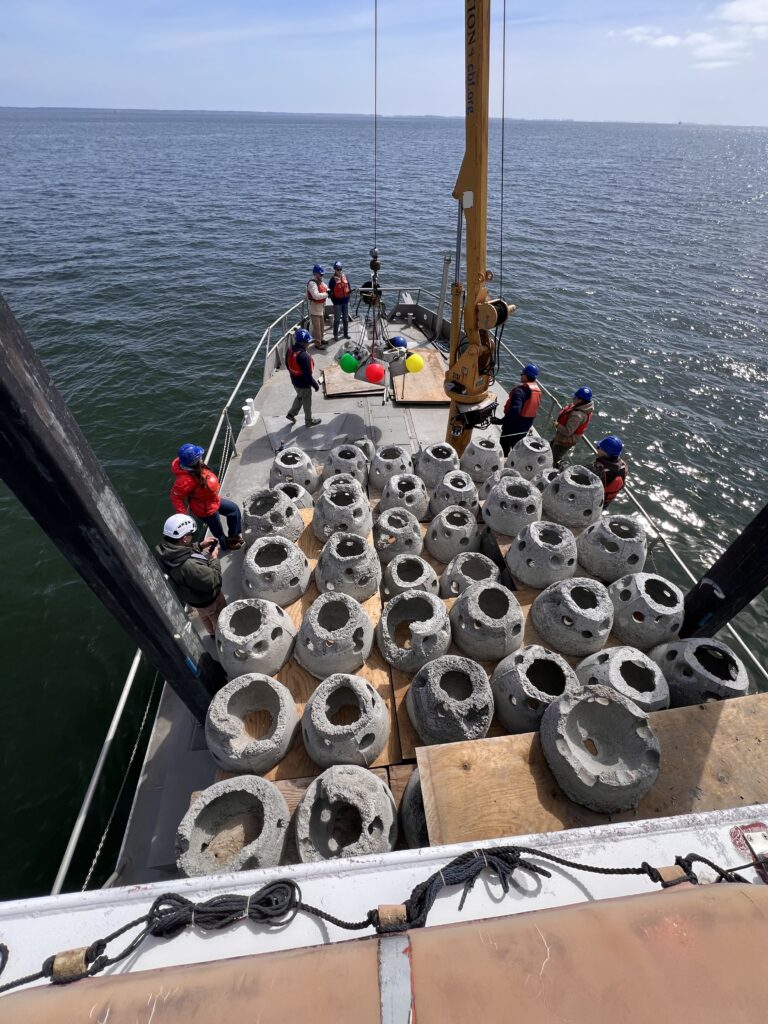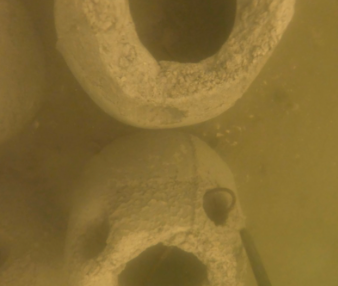
On April 9th, CCA Maryland, the Maryland Artificial Reef Initiative and Chesapeake Bay Foundation placed nearly 200 student made reef balls made by Calvert County 5th graders thanks to their amazing CHESPAX education program. Additional reef balls deployed were built by corporate and community partners through the Living Reef Action Campaign. Mollie Rudow rode along with the team from the Chesapeake Bay Foundation to place the reef.
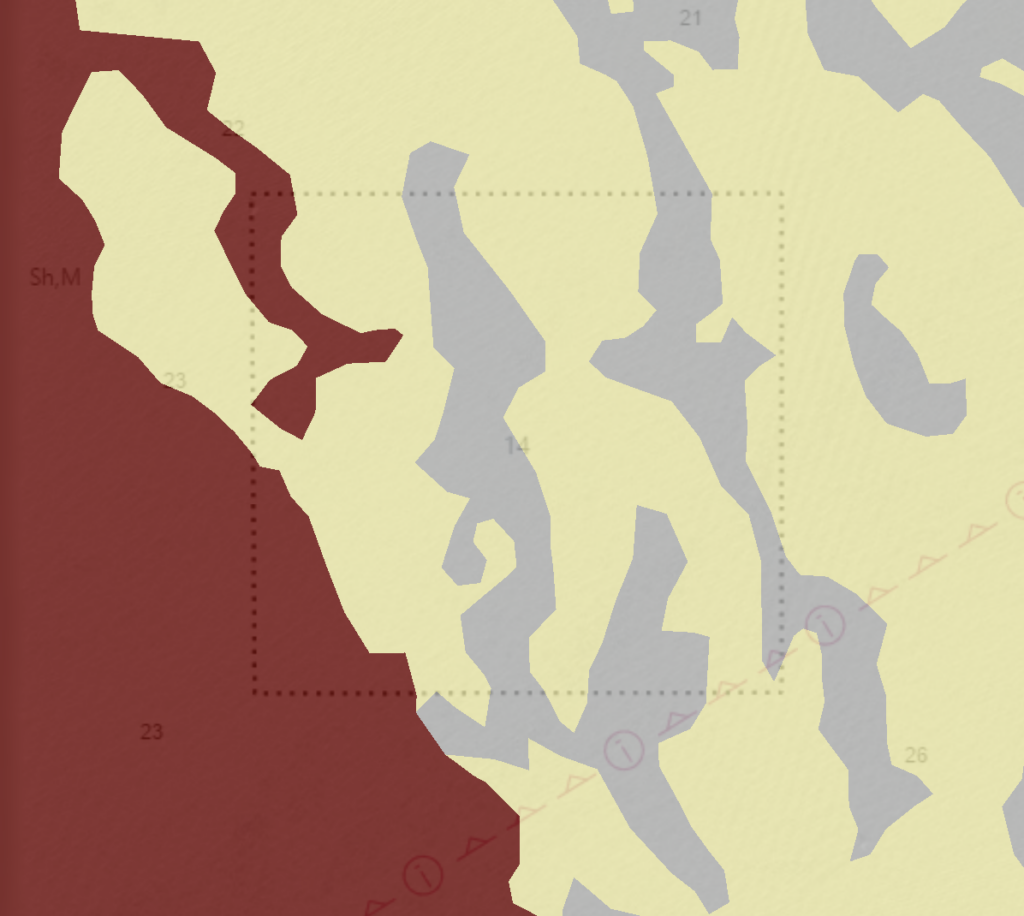
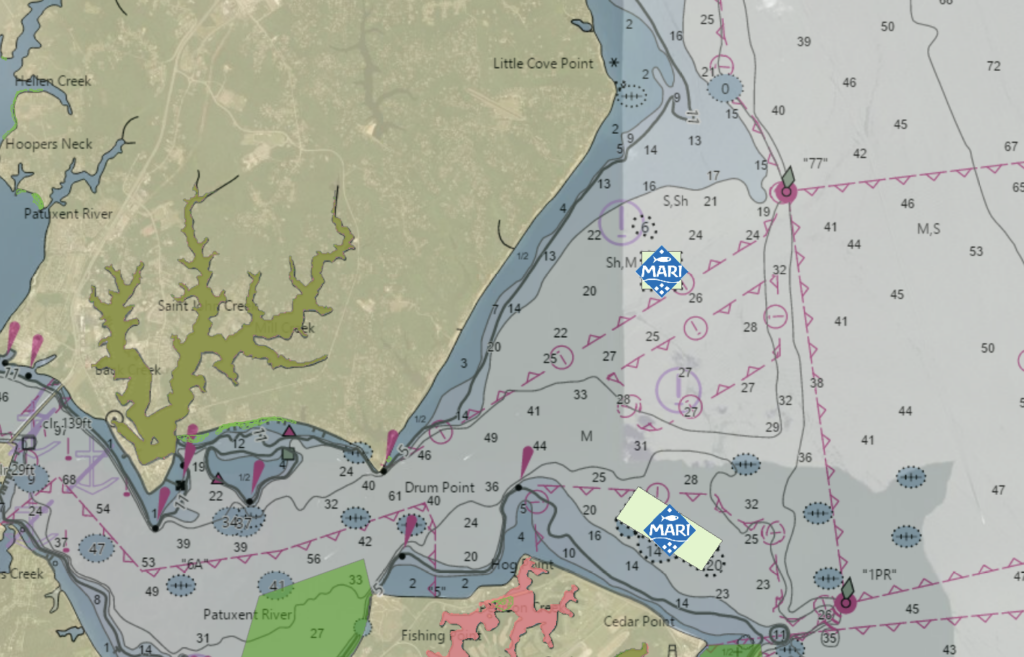
The reef balls were placed within a 75′ radius of: 38.34228 N, -76.38087 W. ( decimal degrees)
By: Mollie Rudow
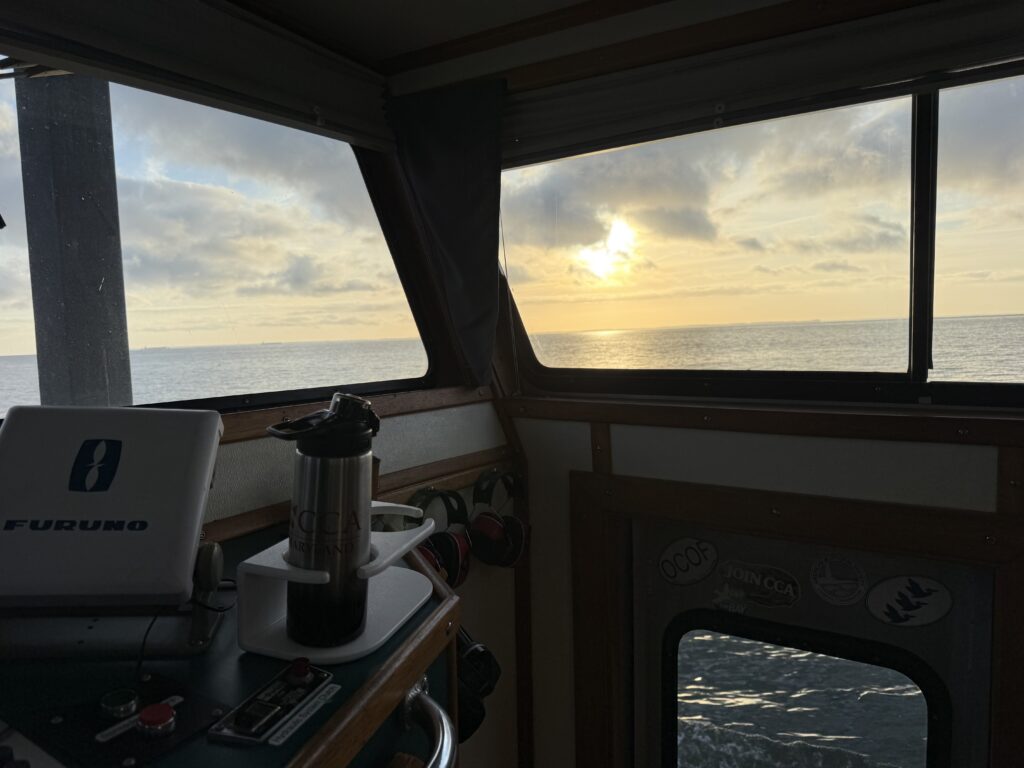
Being at a dock before the sun has fully risen invariably belies a wonderful day ahead. Even if no fish are caught, or conditions are poor enough to defeat a 4:30 AM application of Dramamine, the very least you’ll step away from the docks with is a hazy, pastel sunrise. And it’s tough to beat that.
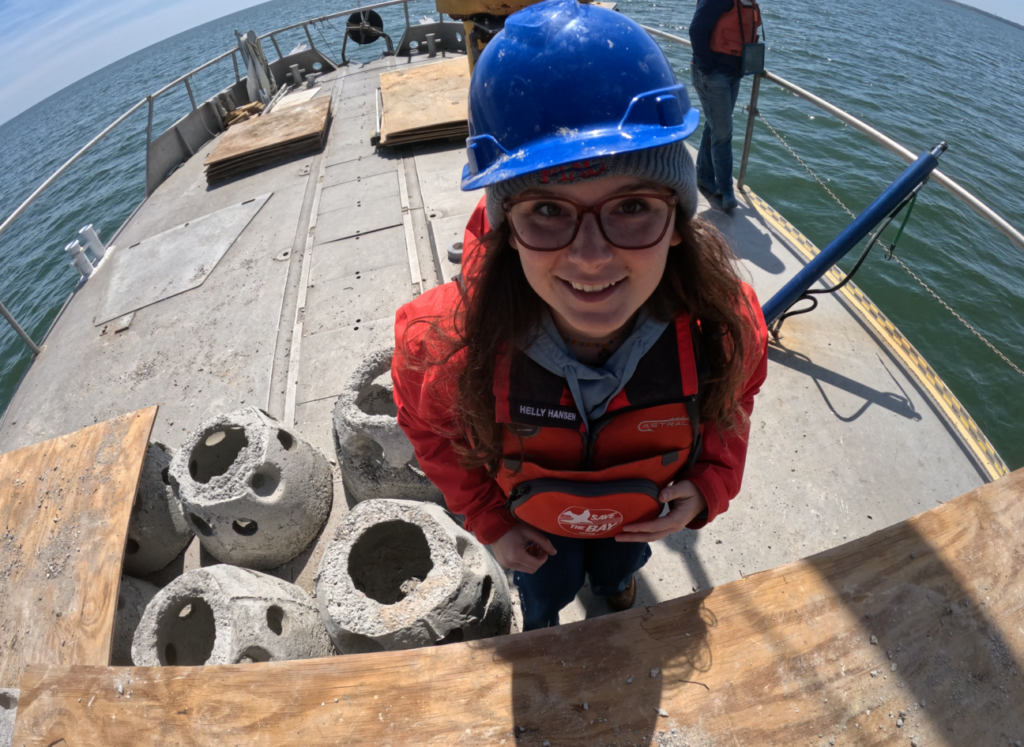
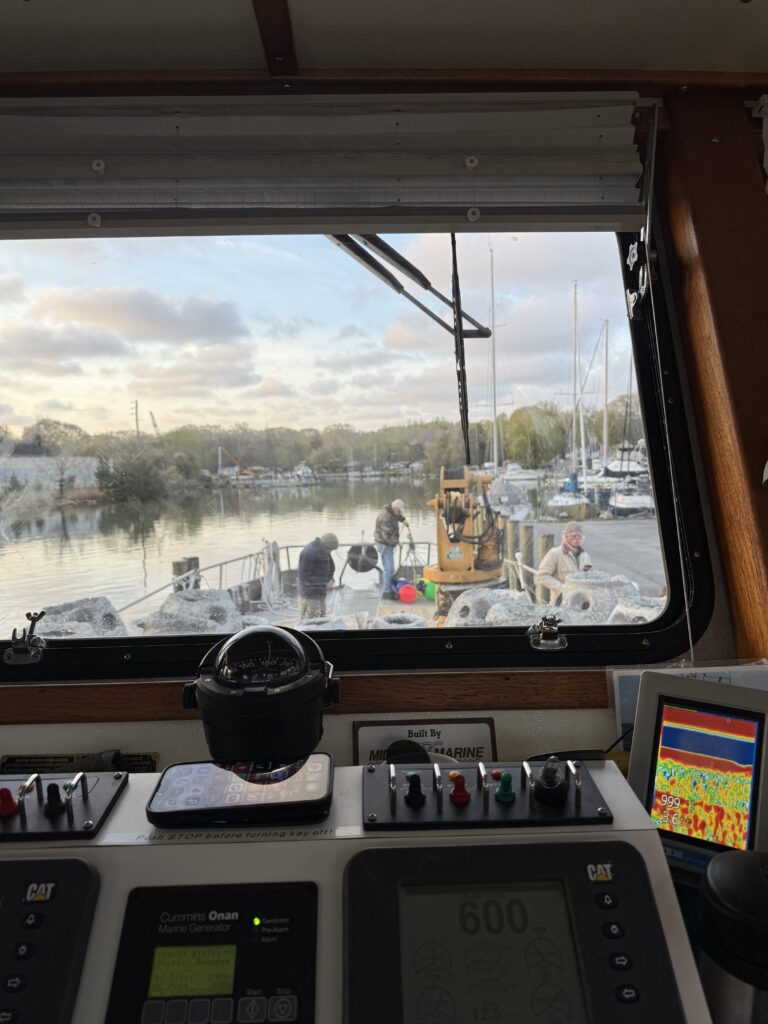
The morning of April 9th, 2026, had one of those subdued, sublime sunrises. The skyline doesn’t seem to burst with color during early spring as often as during warmer days, but the crisp nip of Chesapeake air and stillness of cold morning water has a charm of its own. This morning, the intrinsic beauty of the Bay was complemented by the sight right alongside the dock – 184 reef balls, stacked solidly upon the dock of the Patricia Campbell, Chesapeake Bay Foundation’s barge dedicated to deploying oyster shells and oyster reef balls in the Chesapeake. Coastal Conservation Association (CCA) and Chesapeake Bay Foundation (CBF) staff, alongside volunteers and DNR reef coordinator, Mike Malpezzi, were about to set off on the nearly three-hour journey south from Parish Creek Landing in Shady Side to Little Cove Point. The team would be deploying these oyster reef balls to create artificial reef habitat at the site.
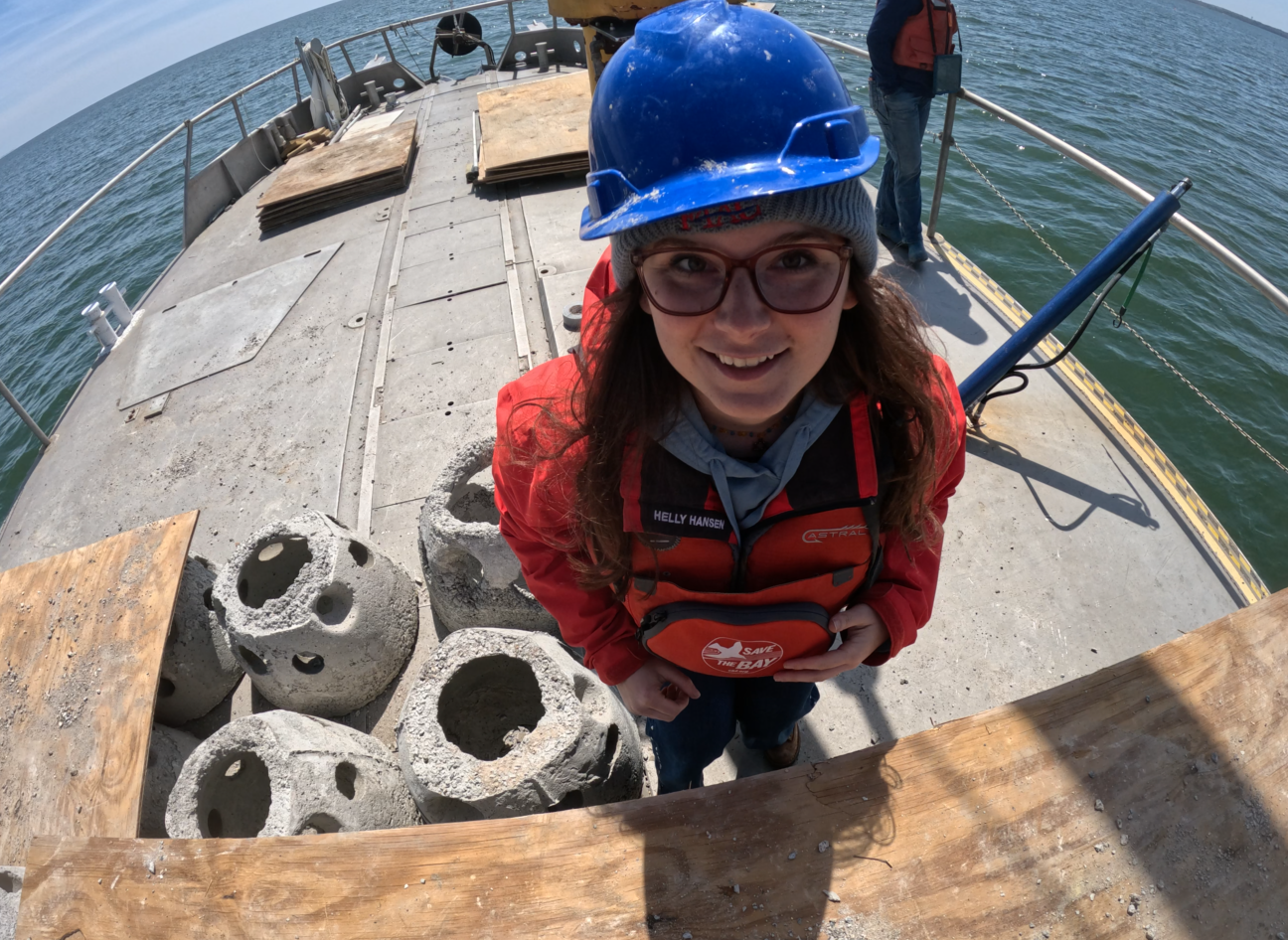
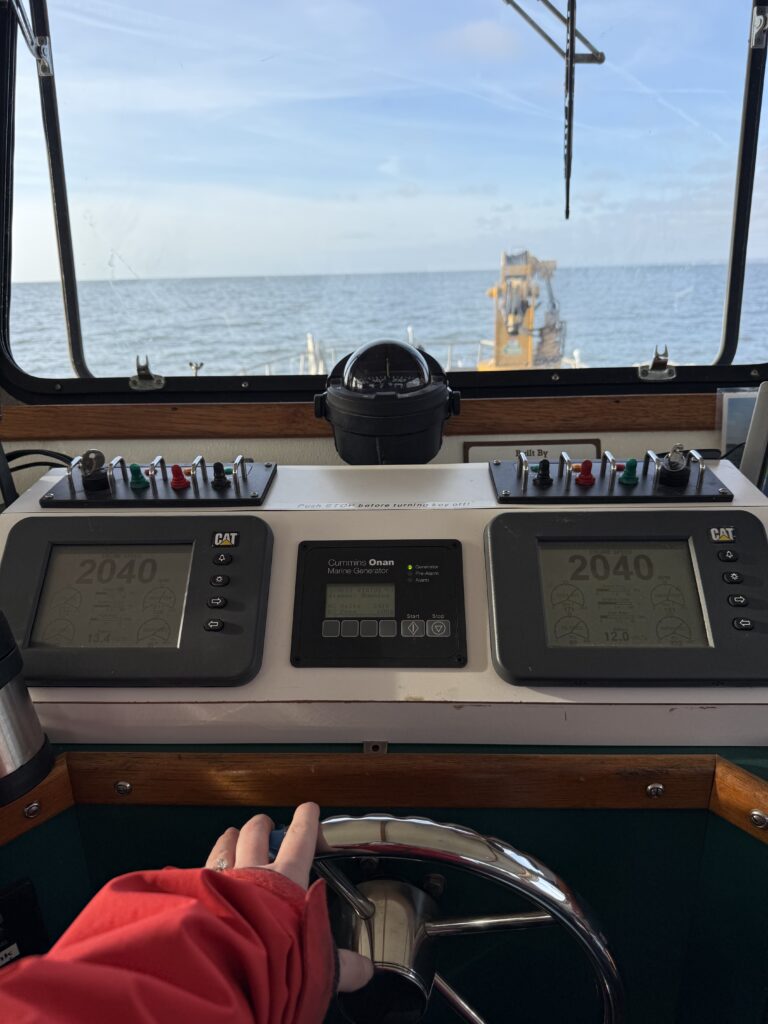
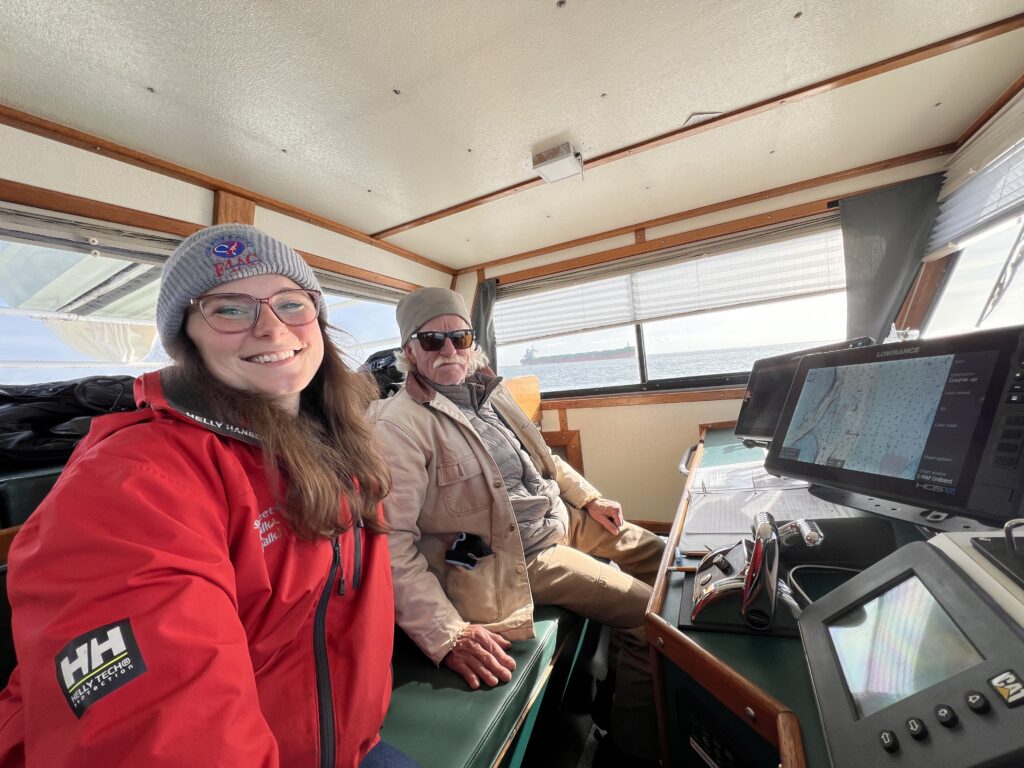
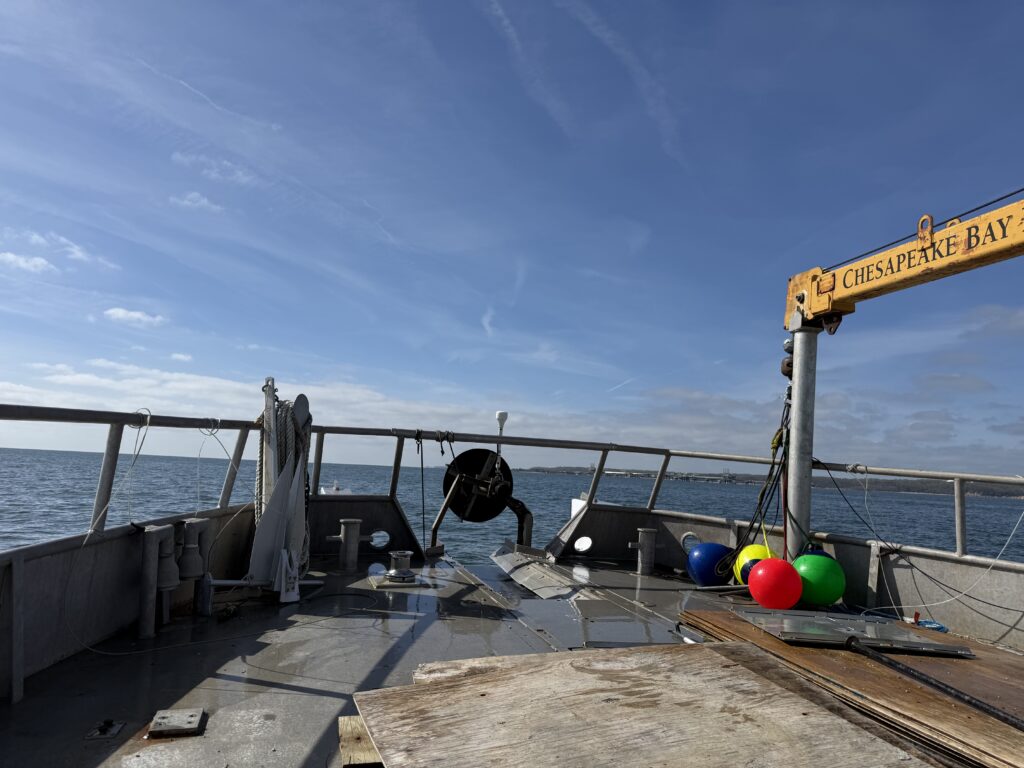
From a prompt 7:00 AM departure to her arrival just before 10:00 AM, the Patricia Campbell chugged along at an impressive 12.5 knots. Carrying 46,250 lbs of reef balls, her speed is nothing to scoff at. The Patricia Campbell is equipped with a bright yellow crane to deploy oyster reef balls, as well as a conveyor belt designed to drop oyster shell along the bottom. The belt itself, which runs part of the bow’s length, ends in a circular white spreader, which allows for the even distribution of shell. Captained by CBF Maryland Oyster Restoration Program Manager Karl Willey, the barge rides comfortably, aided by its heated interior and the coffee pot, which wards off any musty boat smell.
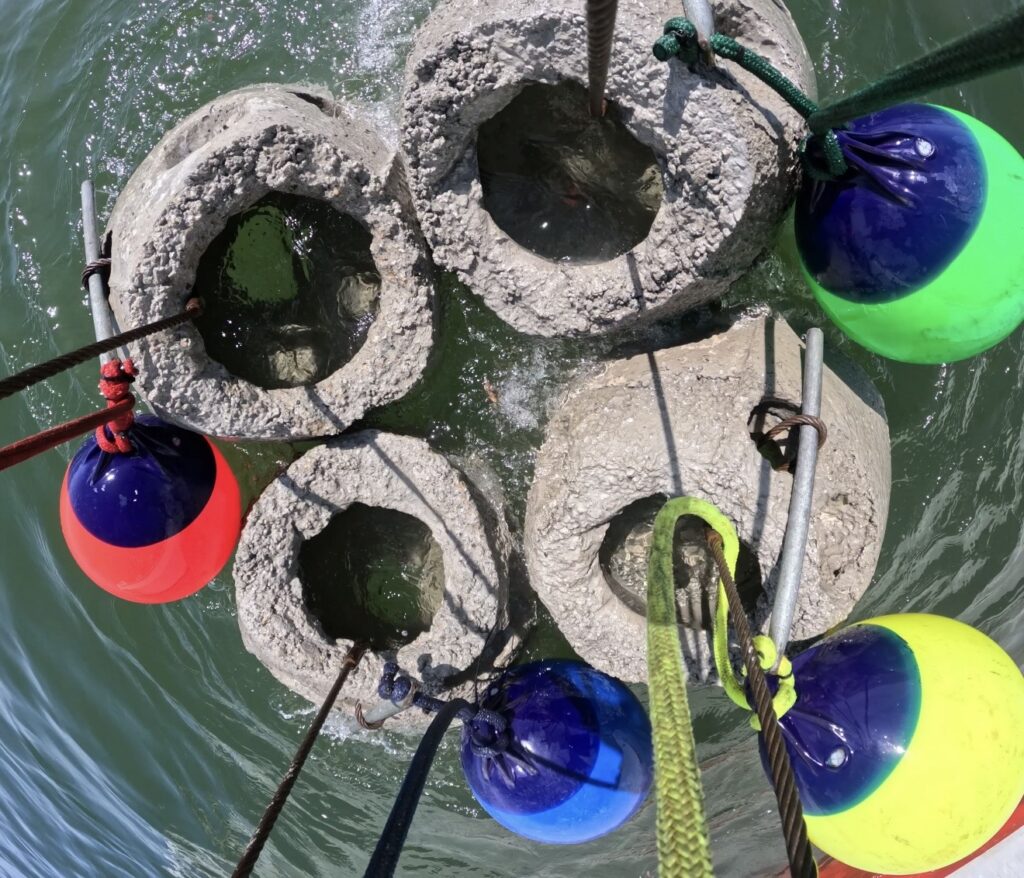
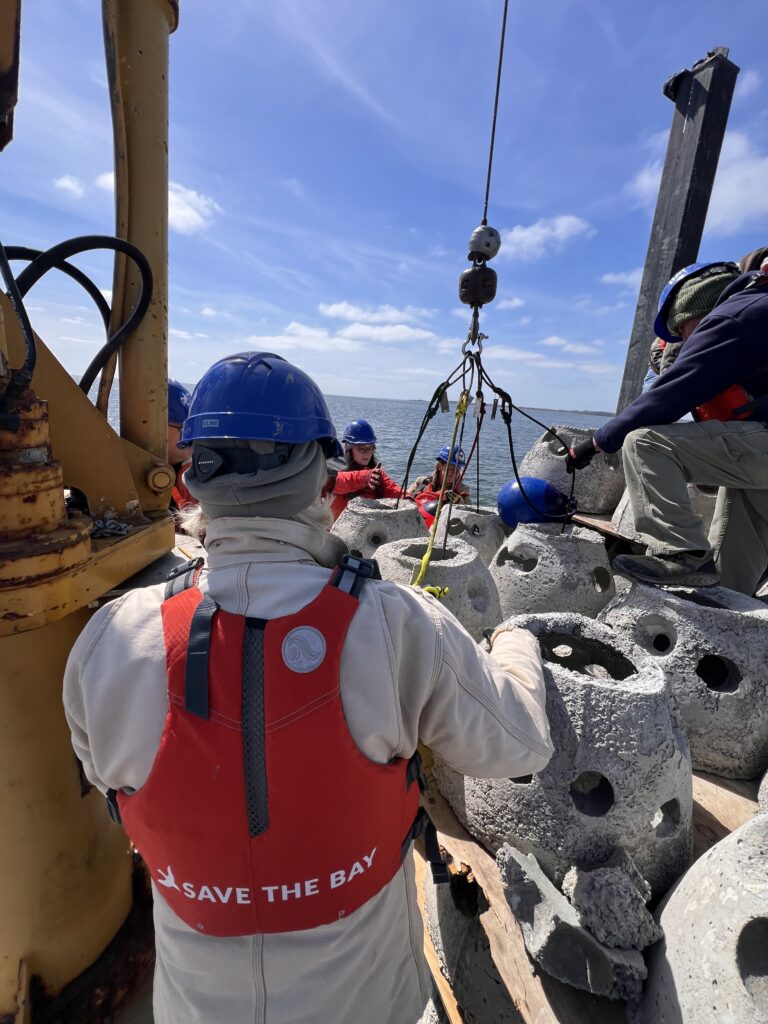
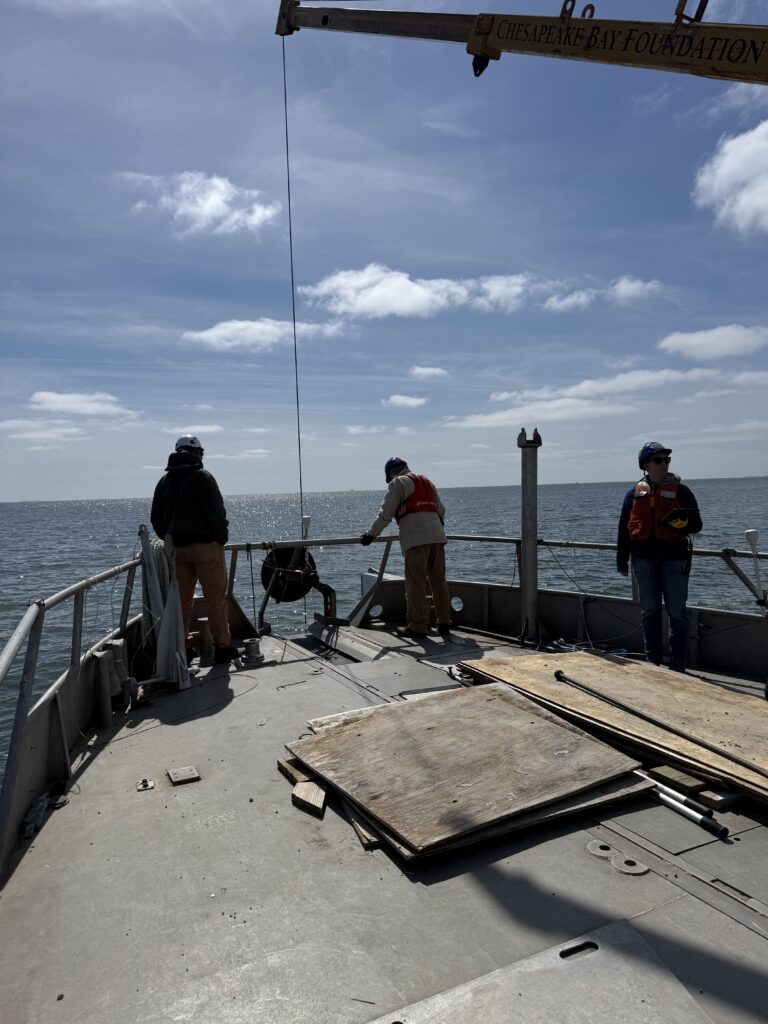
Upon arriving at Little Cove Point, the crew began prepping for deployment to begin. All crew members sported hard-hats and PFDs when on deck. The need for this equipment is apparent; while Dan Johanes, a CBF Maryland Oyster Restoration Specialist who operates the crane, is a true wiz, staring off at a black duck or an unexpected swing of 1,000 pounds of dangling reef balls could easily spell trouble. The first four reef balls hit the water around 10:15 AM. To attach them to the crane, crew members laced a cable loop through a hole in each reef ball, and inserted an adjacent metal bar, also attached to a metal cable through that loop. When the crane begins lifting the reef balls, the metal loop tightens around the bar, allowing them to be lifted. Each set of metal cables is attached to a coloured buoy, helping the crew differentiate between sets of loop-bar combos. The crane operator then maneuvers the reef balls over the gunnel of the Patricia Cambell. Before the reef balls were lowered, CBF Maryland Coastal Resource Scientist Julie Luecke marked the exact coordinates of where each reef ball to be deployed. This practice allows the crane operator to space out the reef balls, for CBF to know the exact location of the reef balls, and ensures none are deployed on top of each other.
Once the reef balls were lowered into the water and reached 24-feet to the hard bottom, the cable from the crane became slack, allowing the metal bar to slip out of the cable loop securing it to the reef ball. The crane operator can tell when the metal bars have slipped through, as the buoys come back up to the surface. They then begin intake of the crane’s cable, and the process repeats itself. On this day, that process was repeated 46 times.
Throughout the 46 individual deployments, the crew occasionally swapped out and breaked for a snack or hot coffee (it’s impossible to overstate how a cup of hot coffee brightens any boating experience). The morning winds remained mild into the early afternoon, and the full sun counterbalanced whatever chill the breeze would have brought. The final four reef balls were deployed at 2:37 PM, and the crew was headed back to the dock by 3:15.
By the time Patricia Campbell was cleated-up back at Parish Creek Landing, the Bay was entering her phase where shadows dance between soft waves and golden sunlight makes the water a fiery orange. Again, a harbinger of a day well-spent. After over twelve hours of work, the crew remained in great spirits. In part, because it’s difficult to be salty when the air smells like marsh and moreso, because a pretty day on the Bay is made even better when there’s new reef habitat to host all sorts of Bay critters. When we give back to the Bay, she gives back to us.
The reef balls deployed in early April, like thousands of other reef balls CCA has built and partners have helped deploy, are reflective of around 100 years of oyster growth, resulting in the hard limestone surfaces oyster spat need to attach to so they can grow. Efforts like this one have created reefs throughout the Chesapeake, bringing in small fish like the naked goby and striped blenny, alongside blue crabs, black drum, and striped bass. They function as hosts for oyster spat, providing a critical substrate for them to attach to as natural shells have been depleted over the past two centuries. No matter how you get out on the water, or for what, you’re providing a service essential to our Chesapeake – to know the Bay is to love the Bay, and to love the Bay is to want to protect it. It’s because of people like you, who get out there and know any morning you’re standing on a dock or Chesapeake shoreline is a good one, that these essential reefs are able to be built.