

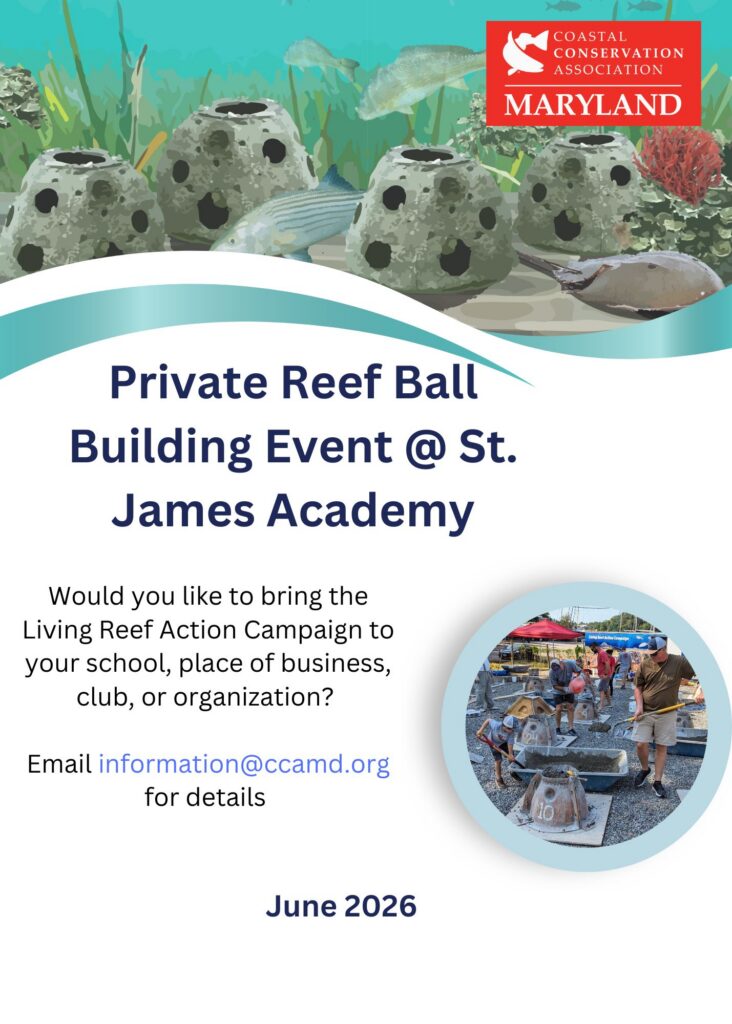
CCA Maryland has partnered with St. James Academy to host a private, hands-on reef ball building event, allowing participants to directly contribute to restoring critical marine habitat in the Chesapeake Bay.
If your company, school, or organization would like to schedule a private two-day reef ball-building experience like the one featured in this video, please contact information@ccamd.org.
Day 1 – Build Day
Participants work in teams of 3–4 to assemble oyster reef ball molds, inflate internal buoys, and mix and pour concrete to form the reef ball structure. This collaborative process combines teamwork, education, and conservation action.
Day 2 – Hatch Day
Teams return to remove the molds, revealing the finished reef ball they helped create. These reef balls will ultimately be deployed in the Chesapeake Bay, where they provide essential habitat for oysters, fish, and other marine life.
This unique experience offers organizations a meaningful way to engage employees or members in hands-on conservation while leaving a lasting impact on the health of our waterways.
Reef Ball Build FAQs
Reef balls are a specially designed artificial reef unit that are used worldwide to build and restore reef habitat. Here in the Chesapeake, reef balls provide important three-dimensional habitat for oysters and many other filtering organisms to attach to. They also provide hollow structure for juvenile fish and crabs to hide from predators. Yes, it’s those predators we pursue as anglers, so reef balls also make some great fishing spots too.
Can't attend? Please consider making a donation to support all of our efforts to protect recreational fishing and marine habitats for future generations.
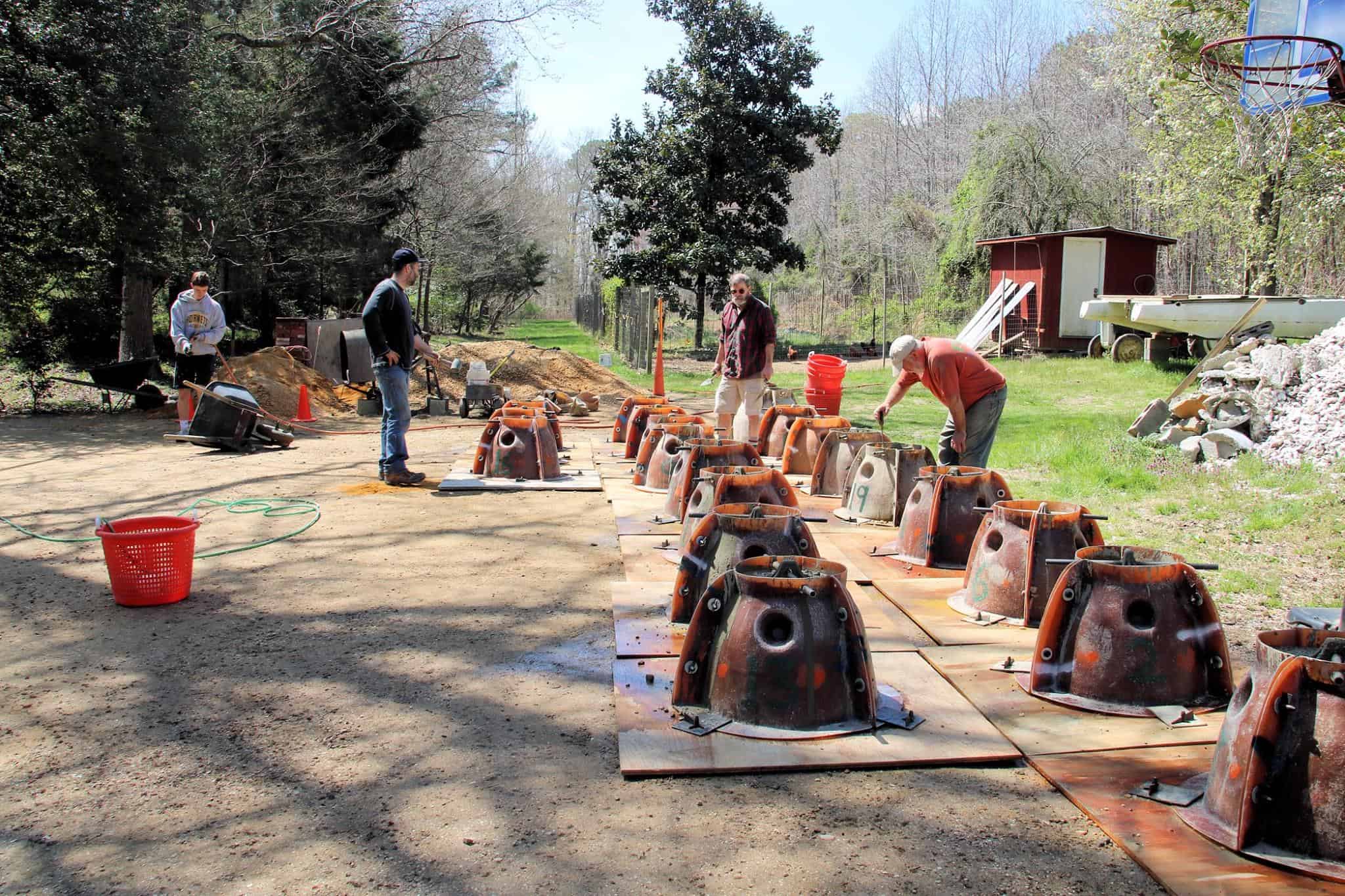
A reef ball building activity. Lo-Profile molds being poured by hand. Photo Credit: St. Mary’s River Watershed Assoc.